
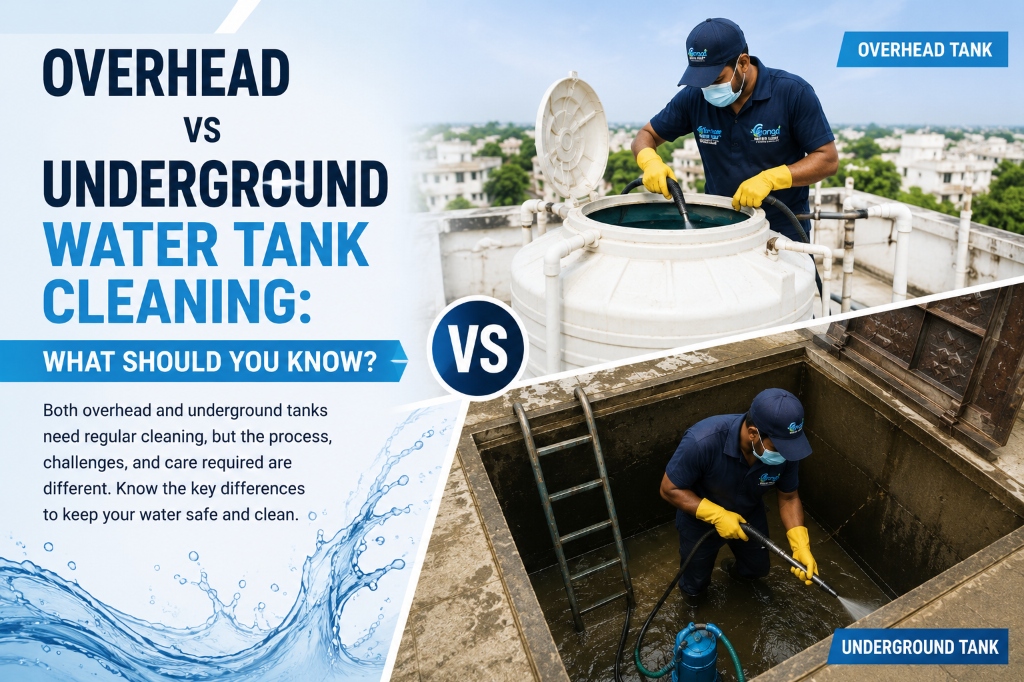
In most residential and commercial properties, water systems use a two-step storage method: an underground sump receives municipal supply water, and pumps transfer it to an overhead rooftop tank for gravity-based distribution.
While both systems store the water you use daily, their location exposes them to different types of contamination. This changes the safety requirements and cleaning techniques needed for each.
1. Contamination Risks & Challenges
Overhead Tanks (Rooftop)
Rooftop tanks are exposed to solar heat and external weather elements. Key issues include:
- Algae Growth: Warm temperatures and sunlight cause rapid algae growth on plastic walls.
- Environmental Dust: Wind-blown dust, leaves, and rainwater can seep through unsealed lids.
- Pest Intrusion: Birds and insects may nest near or inside the tank opening.
Underground Tanks (Sumps)
Underground sumps reside in basements or yards, presenting different challenges:
- Heavy Sedimentation: High volumes of sand, rust, and silt settle on the concrete floor from municipal lines.
- Seepage & Run-off: Cracked concrete can allow groundwater, sewage, or yard run-off to seep inside.
- Bacterial Biofilm: The dark, damp environment encourages bacterial biofilms to grow along concrete walls.
2. Differences in Cleaning Procedures
Access and Safety Protocols
Cleaning an overhead tank often requires technicians to work at heights, climb vertical ladders, and navigate sloped rooftops. Harnesses and ladder security are primary safety concerns.
Conversely, underground tanks are classified as confined spaces. They can have low oxygen levels or build up toxic gases. Technicians require proper ventilation equipment and specialized safety harnesses before entering.
Scrubbing Methods
Rooftop tanks, often made of plastic or stainless steel, need soft fiber brushes to avoid scratching. Underground concrete tanks are sturdier and can handle high-pressure washing machines and stiff scrubbers to clear deep scale deposits.
Summary: Maintain Both for Clean Water
Cleaning only one tank leaves your system vulnerable. If your underground sump is dirty, it will pump contaminated water to your overhead tank. Similarly, a dirty overhead tank will ruin water that was cleaned in the sump. For clean water, both systems must be cleaned regularly.
To learn more about our specific approaches, see our Overhead Tank Cleaning and Underground Tank Cleaning services, or speak with our team to schedule a complete system clean.